
How to Buy A Pool Cue: Expert Advice on Cue Weight, Tips, Shafts & Materials
Posted by Home Billiard on 8th Jun 2026
Ever grab a house cue at the bar and wondered why some players make the game look effortless while your cue ball seems to have a mind of its own? The truth is, the cue you use matters more than most players realize. The right pool cue can improve your control, consistency, and confidence at the table. The wrong one can make even simple shots frustrating.
Buying a pool cue isn’t just about picking the one that looks cool. The game you play, the cue’s weight, tip size, materials, and even the wrap can change how the cue ball reacts. And if you don’t know what to look for, it’s easy to waste money on a cue that doesn’t suit your style.
In this guide, you’ll learn how to choose a pool cue that actually fits your game. By the end, you’ll know how to:
- Pick the right cue for pool, snooker, or billiards
- Choose the best cue weight, length, and tip size for your playing style
- Understand the difference between maple, ash, and carbon fibre shafts
- Decide if low-deflection technology is worth the price
- Avoid common mistakes first-time cue buyers make
Our team at Home Billiards has spent years around pool tables, testing cues, helping players choose equipment, and watching how different setups affect real games. We’ve seen what works, what’s marketing hype, and what actually improves your play.
Let’s break down exactly how to choose a pool cue that feels right the moment it hits the table.
Types of cues
Game type
The first order of business is to decide what type of cue you need. Start by taking a look at the type of game you play. There are three types of cues:
- Pool cues
- Snooker cues
- Billiards or carom cues
Each has a different configuration designed for its specific game. For instance, snooker cues have a thinner shaft, a smaller 9–11 mm tip, and are made of ash with a brass ferrule. The thin shaft and small tip make it optimal for snooker, which uses smaller balls on larger tables.
Cue function
Unlike golf, you don’t need a different cue for every shot; however, having a specialized cue in your cue case can help you get out of jail when you’re on the wrong side of the eight ball.
Break cues
Break cues are heavier and include a harder tip and stronger ferrule. Break cues help you transfer more energy to the cue ball, which gives you a more powerful break. If you’re feeling like your first shot in a game is weak, a break cue might help you stay at the table.
Here’s one of our favourite break cues:
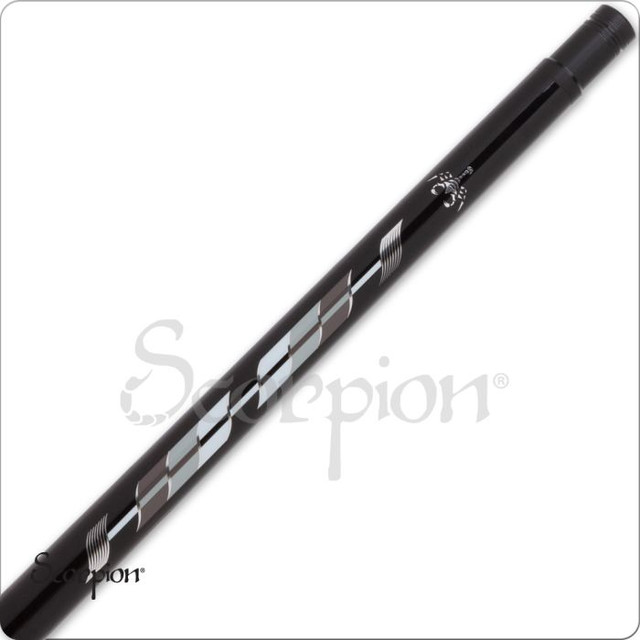
Scorpion Pool Cue
Jump cues
Jump cues are short and light with a hard tip. Use a jump cue to jump over balls that are in your way. It’s a specialized shot that needs plenty of practice, but it can give you an advantage when you’re out of position.
Check out this video:
https://youtu.be/gmI1IcVodrc?si=lGJgmlDoQK1ROlWj
We recommend that everyone start with a standard playing cue or a house cue. Standard cues are versatile, and you can use them for all kinds of power or precision shots. Once you have a sense of your game, where your strengths and weaknesses are, then look at specialized cues to add to your arsenal.
Here are a couple of our most popular standard playing cues:
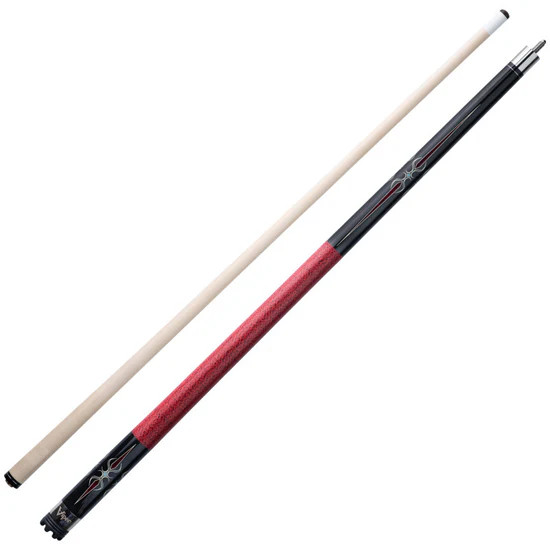
Viper Sinister Pool Cue
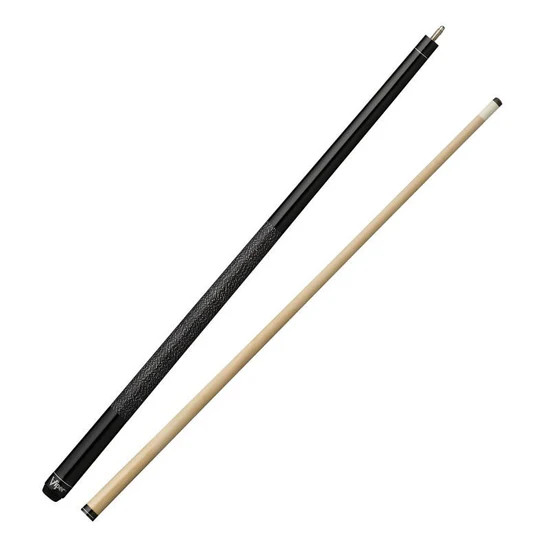
Viper Elite Pool Cue
Cue size
Tip size
Cue tip diameter changes how much spin or “English” you can create, how forgiving the cue feels, and how easy it is to control power and accuracy. Smaller tips allow you to strike closer to the edge of the cue ball, creating more extreme spin and finer position play. However, a small tip punishes inaccuracy.
Here are the tip size ranges you’ll find:
- Narrow tips: 9–11 mm
- Wide tips: 12–14 mm
Most cues are 13 mm until you get to higher-priced low-deflection cues (which we’ll talk about in a minute).
Cue length
Most adult cues are 58 inches long, with shorter “junior” cues down to 36 inches and some extended cues up to 62 inches. Player height is a determining factor when deciding what cue length to buy. For the average adult, a 58” cue works perfectly.
Cue weight
Cue weight is something you’ll want to spend more time on. Most modern pool cues weigh between 17 and 21 oz, and the “safe default” for adults is 19 oz. Lighter cues give you better feel and cue ball feedback, while heavier cues give you more natural power. Once you’ve narrowed down a brand and model, try different weights within each model.
One additional note about cue weight. Some brands, like Dufferin, have weight-balancing systems that let you adjust your cue's weight with different hex bolts. Weight-balancing is a great feature; however, we recommend finding a cue that fits well without the accessory, then adding a weight system to fine-tune it.
Cue construction and material
One-piece vs multi-joint cues
Cue systems range from solid one‑piece sticks to cues with two, three, or more joints; each trades feel for portability.
|
Cue type |
Pros |
Cons |
Typical use |
|
One‑piece |
Very direct, consistent feel and feedback; no joints to loosen; simple construction |
Hard to transport/store; can’t swap shafts; if it warps, whole cue is done |
House cues; fixed home tables; some dedicated snooker/pool rooms where the cue rarely leaves |
|
Two‑piece (center) |
Easy to carry in a case; huge model selection; can upgrade/replace shafts |
Slightly less “one‑piece” feel; joint can loosen or wear over time |
Most personal cues, league and tournament play, players who travel between venues |
|
¾‑joint |
Plays close to a one‑piece; good feedback; still portable |
Needs a slightly longer case; fewer options in some markets |
Serious snooker and English‑pool players; players prioritizing feel with some portability |
|
Multi‑joint / with extensions |
Highly portable; can shorten for tight spaces; extensions give extra reach |
More joints = slightly softer feel; more parts to maintain and keep tight |
Pub or home tables with tight walls; frequent travellers; players needing built‑in reach options |
Here’s how to decide which cue system is right for you
- If pure feel and feedback matter most, and the cue will live in one room, lean one‑piece or ¾‑joint.
- If you play in leagues, travel, or want easy transport and future shaft upgrades, a standard two‑piece is best.
- If you play in cramped pubs or need lots of reach/adjustability, look at multi‑joint cues with butt extensions or removable sections.
One subtle advantage of choosing a two-piece cue is that you can mix and match the shafts and butts. Multi-piece cues allow you to upgrade over time and try different styles to find the ultimate combination. If you decide to use a two-piece system, we recommend you get a cue with a Uni-lock-style joint or another industry standard. Using an industry standard ensures you don’t get stuck with a single brand. For example, Predator cues use the Uni-lock joint, which gives you an upgrade path when you’re ready.
Wood vs composite (carbon fibre and fibreglass)
Cue shafts and butts are usually wood (Canadian maple, ash, exotics) or composites (carbon fibre), and each changes feel, feedback, and maintenance more than raw power.
|
Material |
Feel / feedback |
Maintenance & durability |
|
Canadian maple |
Warm, slightly softer, more “forgiving” feel; smooth hit with moderate vibration and natural feedback. |
Needs regular wiping and occasional light sanding; can warp with humidity; the tip and shaft are easy to service. |
|
Ash |
Crisper, more “direct” feedback; a bit more perceived flex and sharper vibration, very connected feel. |
Similar care to maple: wipe clean, avoid moisture and heat; also susceptible to warping if not stored well. |
|
Carbon fiber |
Very stiff, consistent hit with less subtle vibration; feel can be more muted or “clinical” vs wood. |
Extremely low‑maintenance: just wipe clean; effectively warp‑proof, very durable, and not affected by humidity. |
Generally, pool cues are made from Canadian maple or carbon fibre, while snooker cues are made from ash.
Learn more about pool cue maintenance.
Low deflection cues
A low deflection cue is a pool cue designed to reduce how far the cue ball strays off its intended line when struck with spin. We go into more details in our guide to low deflection cues, but these cues give you more control when you try to add spin or “English” to your shots.

Low-deflection shafts achieve their performance through smart engineering. Here are some of the key features you’ll see:
- Joint technology: Many cues use advanced joints that create a tighter connection between the shaft and butt. This improves energy transfer while reducing unwanted vibration.
- Tip shapes: Shafts often come with thinner tips that provide a more precise strike on the ball. Players can choose shapes that match their playing style, from rounded to flatter designs.
- Ferrule design: The ferrule—the small piece between the tip and the shaft—tends to be shorter or made of lighter material. This reduces front-end weight, which lowers deflection.
- Finish options: While traditional maple is common, modern low-deflection shafts often use carbon fibre. These resist warping, last longer, and maintain a smooth stroke with less maintenance.
Low-deflection cues tend to have a higher price tag, but you can find budget-friendly models.
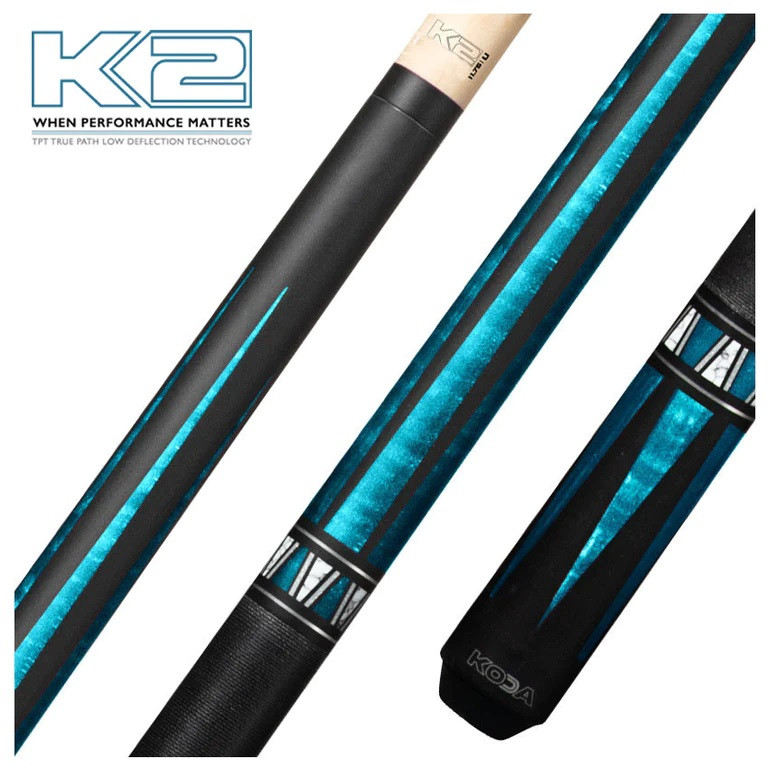
Here’s one of our favourite low deflection cues:
Cue tip style
As far as features go, cue tip style is the final decision you need to make when purchasing a cue. Cue tip style is about choosing the hardness of the cue tip, which changes feel, consistency, and maintenance more than raw spin potential. There are three hardness levels:
|
Tip hardness |
Feel / feedback |
Play characteristics |
Typical use |
|
Soft |
Cushiony, very “grippy,” lots of tactile feedback, more noise/vibration |
Easy to work the cue ball and control spin; deforms/mushrooms faster, more upkeep. |
Spin‑heavy players, touch/position specialists, practice cues. |
|
Medium |
Balanced, solid but still responsive; “neutral” feel most players like. |
Good mix of control, spin, and longevity; consistent and forgiving. |
General‑purpose playing tips, league and tournament main cues. |
|
Hard |
Firm, crisp hit with a sharp “pop,” less deformation, more muted grab. |
Great power and consistency, holds shape long; less forgiving on sloppy off‑center hits. |
Break and jump cues, players who want low maintenance and a firm hit. |
There are two cue tip construction methods:
|
Construction type |
Feel / feedback |
Play characteristics |
Typical use |
|
Single‑layer |
Traditional, direct leather feel; can vary slightly from tip to tip. |
Simple, durable; softer versions mushroom faster and change character as they wear. |
Budget or house cues, traditionalists, break tips, basic upgrades. |
|
Layered (laminated) |
More uniform feel across tips; often a smooth, consistent “grab” on the ball. |
More consistent hardness and response, slower and more predictable wear, better shape retention. |
Mid‑ to high‑end playing cues, serious league/tournament players. |
Lastly, there is the shape of the cue tip. A cue tip radius is either dime- or nickel-shaped:
|
Tip shape |
Feel / feedback |
Play characteristics |
Typical use |
|
Dime |
Slightly more rounded dome; feels a bit more “focused” at contact. |
Can make precise spin a bit easier, especially on smaller‑diameter tips; slightly less forgiving to sloppy hits. |
Smaller tips (~10–11 mm), players chasing max spin/precision; many snooker/English‑pool style setups. |
|
Nickel |
Flatter dome; feels slightly broader and more forgiving on contact. |
Slightly larger effective sweet spot, easier everyday contact; still plenty of spin if stroke is solid. |
Standard pool tips (~12–13 mm), general‑purpose league and club play, good for most players. |
How to choose a pool cue tip style:
- New/casual player: Medium hardness, nickel shape, single‑layer or basic layered tip, which is simple and forgiving.
- League/advanced player: Medium or medium‑soft layered tip in your preferred shape; adjust softer or harder based on how much feedback vs durability you want.
- Break/jump cue: Hard to extra‑hard (often phenolic) tip for maximum power and durability.
Just like the rest of your pool cue, pool cue tips need to be maintained. Here’s a guide on when to replace your pool cue tip.
How much does a pool cue cost?
A pool cue costs about $40 to $3,000+, depending on material, brand, and construction quality. Entry-level pool cues cost $99–$299 and are made of basic maple wood. Mid-range cues cost $299–$699. Professional cues with carbon fibre shafts or premium inlays cost $699–$3,000+.
What to know which pool cue brands are the best? We’ve got you covered. Here are the best pool cue brands.
Best pool cue for beginners
The best pool cue for beginners is one that fits your budget. We don’t categorize cues by skill level. In the billiards store, what it comes down to is price and what you’re looking for in a pool cue. For beginners, we recommend looking for a cue that’s around $299.
If you’re just starting, you may want to consider a low-cost pool cue that avoids exotic woods, artful inlays, or high-tech features like carbon fibre. However, these features aren’t just for advanced players. Beginners can do just fine with these options if you’re willing to spend. So, the best way to find a cue for a beginner is to consider what you want and how you’ll use it, then try a few different options that fit your budget.
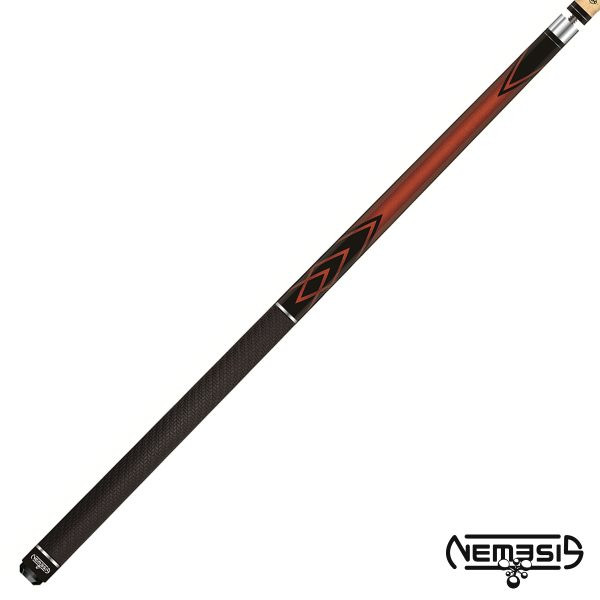
Here are a few beginner-budget-friendly options:
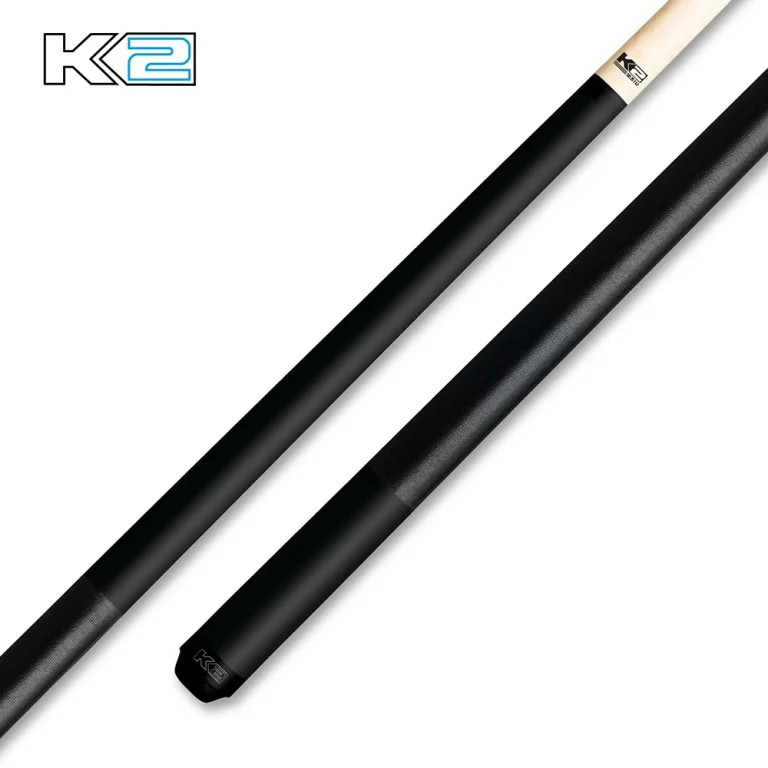
Koda Black & Bacote Split
Extras
Wraps
Cues come with or without wraps. Wraps change how secure and comfortable the cue feels in your back hand, not how the balls move. Wrapless cues (just finished wood) feel clean and very connected, which many players like if their hands stay fairly dry. Irish linen adds a light texture that slides smoothly and absorbs a bit of moisture, giving a traditional feel that doesn’t get sticky.
Leather and rubber wraps focus more on grip and cushioning. Leather feels soft and premium, with a secure hold that’s nice when you’re hitting harder or under pressure. Rubber or synthetic grips are very tacky and low‑maintenance, which is great if your hands get sweaty, but they mute some of the natural wood feel and can look more utilitarian.
Colour
Cues also come in many different colours from clear stain to vibrant hues or include brilliant, artful inlays. If you’re looking for a cue that wows people at the bar or league when you pull the cue out of your case, then take a close look for a cue that matches your style.
Whether wraps or a splash of colour, these features increase the price, so be sure to weigh the pros and cons.
Rack ‘em up
Choosing the right pool cue comes down to fit, feel, and how you like to play. Once you understand cue types, tip sizes, weight, materials, and construction, it becomes much easier to narrow down your options and find a cue that feels natural in your hands. The best cue isn’t always the most expensive one. It’s the one that gives you confidence every time you step up to the table.
Ready to upgrade from a house cue? Explore our full selection and buy a pool cue that fits your style, budget, and level of play.
How do you maintain a pool cue to keep it in good condition?
Maintain a pool cue in good condition by cleaning the shaft after every 2–3 hours of play, storing the cue in a straight case at 60–75°F (16–24°C), and avoiding moisture or warping. Replace the cue tip every 6–12 months and lightly polish the shaft with a cue cleaner every 2–4 weeks.
How often should you replace a pool cue tip?
Replace a pool cue tip every 6–12 months for regular players who play 5–10 hours per week. Replace the tip sooner when the thickness drops below 1–2 mm, the tip hardens, or it fails to hold chalk. Frequent players may replace tips every 3–6 months to maintain accuracy and spin control.
Should beginners buy a carbon fibre pool cue or a maple cue?
Beginners should buy a maple pool cue because maple shafts provide better feedback and cost $60–$150, while carbon fibre cues cost $300–$700. Maple cues help beginners learn stroke control and cue ball feel. Carbon fibre cues reduce deflection and require less maintenance, but benefit experienced players more than beginners.
What accessories should you buy with a new pool cue?
Buy essential pool cue accessories, including cue chalk, a hard cue case, a tip shaper, and a microfiber cloth. Chalk improves cue tip grip and reduces miscues. A cue case protects the cue from warping and damage. A tip shaper maintains tip curvature. A cloth cleans the shaft after 2–3 hours of play.