
Luxury Poker Room Design: How to Create the Ultimate Home Card Room
Posted by Home Billiard on 14th Sep 2026
There’s a big difference between having a poker table in your basement and having a poker room people actually look forward to playing in.
A true luxury poker room feels intentional from the moment you walk through the door. The lighting draws your eye to the table. The chairs are comfortable three hours into a game. The chips have the right weight in your hand. Even the finishes, acoustics, and spacing work together to create an atmosphere that feels closer to a private club than a typical home game room.
And you don’t need a massive space to pull it off.
In this guide, we’ll break down how to design a luxury poker room from the table outward, including high-end seating, lighting, materials, accessories, technology, layout, and small-space ideas. You’ll also see how to bring those elements together into a room that looks polished, plays comfortably, and feels built specifically for poker night.
What Makes a Poker Room "Luxury" (vs. Just a Game Room)
A game room holds a table and some chairs. A luxury poker room is a destination, built specifically for the ritual of the game rather than repurposed from a corner of the basement.
The difference comes down to intent. A standard game room prioritizes function. A luxury poker room prioritizes experience, which means every choice, from the table's material to the height of a light fixture, is made deliberately rather than by default.
A few markers separate the two:
- Materials over multipurpose furniture. A folding table with a vinyl top is functional. A table built from solid wood with a hand-stitched leather rail is more durable, but it also signals that the room has a single purpose.
- Proportion and scale. The table, seating, and walkways are planned together, not squeezed into whatever room is available.
- Lighting as a design element, not an afterthought. A bare overhead fixture lights a room. A layered plan, with task, ambient, and accent sources, shapes its mood.
- Consistency of style. Every piece, from the chairs to the bar cart to the wall art, follows a single design direction instead of being assembled piecemeal over time.
- Sensory detail. The weight of the chips, the texture of the felt, the sound a chip makes hitting the table: these are invisible in a casual setup and central to a luxury one.
None of this requires an enormous room or an unlimited budget. It requires treating the poker room as its own design project rather than an add-on to an existing space. The sections below break down which choices carry the most weight, starting with the one every other decision follows: the table.
Choosing Your Centrepiece: Luxury Poker Table Options
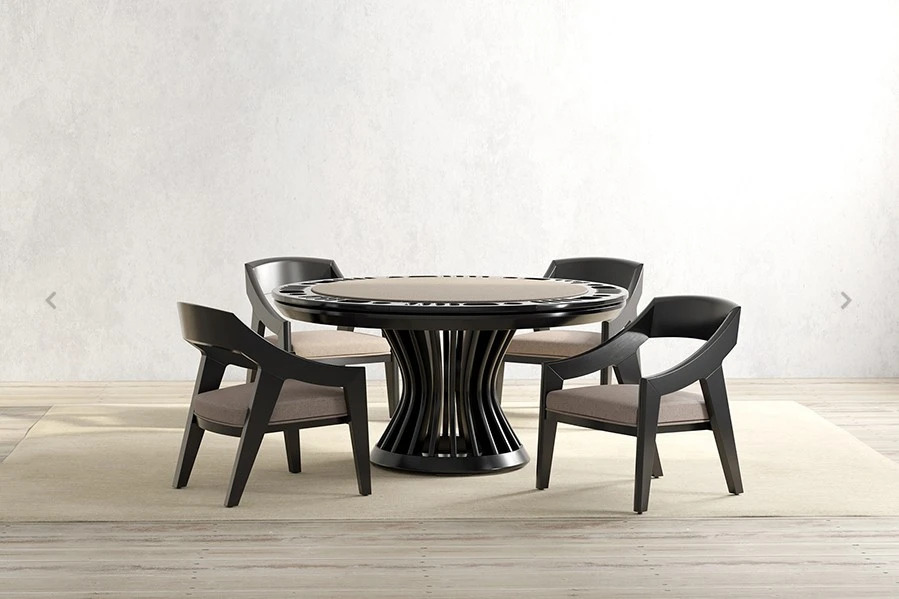
Your poker table is the first thing anyone notices when entering the room, and it sets the tone for everything else. Treat it as a long-term investment, not a purchase you'll replace in a few years.
Custom Wood, Leather & Marble Finishes
Solid wood construction is the baseline. Mahogany, walnut, and oak are common choices because they hold up to years of use and take stain well, giving the piece a furniture-grade look rather than a game-equipment look.
Leather rails add comfort and visual weight. A padded, hand-stitched rail costs more than a vinyl one, but it wears better and feels noticeably different under the arm during a long session.
Marble or stone accents appear less often but work well on a table base or an adjacent bar surface, adding a cool, formal contrast to the warmth of wood and leather. They're heavier and less forgiving if you need to reconfigure the room later.
Round vs. Oval vs. Octagon: Layout by Room Size
Table shape should follow room size and seating count, not the other way around.
- Round tables suit smaller rooms or groups of six to eight. They keep everyone at a consistent distance from the dealer and make the room feel less crowded.
- Oval and rectangle tables suit larger groups, typically eight to ten players, and are the shape most associated with a traditional casino layout.
- Octagon tables are more compact for their seating capacity than a round table of the same size, which makes them practical for square rooms where corner space matters.
Plan for at least three feet of clearance between the table's edge and the nearest wall or piece of furniture. Anything tighter makes it hard for players to push back or for a host to move around during the game.
Convertible/Dining-Top Tables for Multi-Use Rooms
Not every home has a room that can be dedicated to poker alone. A table with a matching dining top solves this by converting the poker table into a standard dining surface when it's not in use.
This isn't a compromise on quality. High-end convertible tables use the same materials and construction as dedicated poker tables, and a well-made top sits flush enough that the transition isn't obvious. The tradeoff is logistical: someone needs to store and swap the top, and the table needs to work in both roles.
High-End Seating: Chairs Built for Long Sessions
The table sets the tone, but the chairs decide whether players stay comfortable long enough to enjoy it. Poker games often run several hours at a stretch, and the wrong seating shows within the first hour.
Leather remains the standard upholstery choice for the same reasons it works on the table rail: formal, durable, and easy to clean after a night of drinks and snacks. Top-grain or full-grain leather holds up better over time than bonded leather, which tends to crack and peel with regular use.
Beyond material, a few features separate a good poker chair from an ordinary dining chair:
- Padded armrests, set at a height that lines up comfortably with the table's rail.
- Lumbar support. A chair built for short-term use rarely accounts for posture over a multi-hour session; contoured or adjustable backs make a noticeable difference.
- Swivel or caster bases, so players can move in and out without scraping the chair across hardwood or tile.
- Consistent height across the full set. Mismatched heights are a common oversight when chairs are bought separately rather than as a set.
Chairs should match the table's finish and colour palette rather than being chosen independently. A mismatched set is one of the fastest ways to make an otherwise well-designed room look unplanned.
Lighting Design for a High-Stakes Atmosphere
Furniture and finishes only go so far without the right light to show them off. Lighting does more work than any other element in the room, and it's the one most often underbuilt: a single overhead fixture might illuminate the table, but it won't create the atmosphere that separates a luxury room from a basement with a good table.
Statement Fixtures Over the Table
The fixture directly above the table earns its place through two things: even light distribution and visual presence. A pendant light or linear chandelier positioned 30 to 36 inches above the surface typically avoids glare on the cards while casting a warm, focused pool of light on the felt.
This is also the fixture most people notice first, so treat it as a design statement rather than a purely functional purchase. Brass, blackened metal, and smoked glass are common choices because they stay formal without competing with the table itself.
Layered Ambient & Accent Lighting
A single source over the table leaves the rest of the room dark and flat. Wall sconces, recessed can lights, or a floor lamp near the bar area fill in the space around it, so the room doesn't feel like a spotlight in a black box.
Dimmable controls are worth the modest extra cost: the right brightness for a casual game night differs from what a serious tournament calls for, and a dimmer covers both without a second lighting setup.
One detail worth flagging: warm-toned bulbs, generally 2700K to 3000K, suit a luxury poker room better than cooler daylight tones, which read as clinical and work against the clubby, formal feel most of these rooms are going for.
Wall Treatments, Colour Palette & Materials
Walls set the backdrop for everything covered so far. Darker palettes tend to dominate in luxury poker rooms for a practical reason: they let the lighting and table stand out as the focal points instead of competing with a bright wall colour.
Velvet, Dark Wood & Metallic Accents
Deep tones such as charcoal, navy, hunter green, and espresso brown show up often. They read as formal and give the space an enclosed, clubby feel that a brighter palette doesn't achieve.
Velvet is a common choice for drapery or upholstered wall panels because it absorbs light rather than reflecting it, adding depth instead of flattening the room. Wood panelling, particularly in walnut or a similarly rich tone, does the same while also helping with sound absorption, which counts for more than most people expect in a room with hard flooring and several people talking over each other.
Metallic accents, usually brass or blackened bronze, work best on hardware, fixtures, and trim rather than large surfaces. Used sparingly, they add contrast without competing with the wood and velvet already doing most of the work.
Accent Walls and Millwork Detailing
An accent wall behind the table or bar area adds texture without darkening the whole room. Wainscoting, board-and-batten panelling, or a single wall in a bolder material, such as textured wallpaper or stone veneer, gives the eye somewhere to land.
Millwork, crown moulding, and trim detailing are smaller touches, but they often separate a room that looks custom-built from one that looks assembled from off-the-shelf pieces.
Premium Chips, Felt & Table Accessories
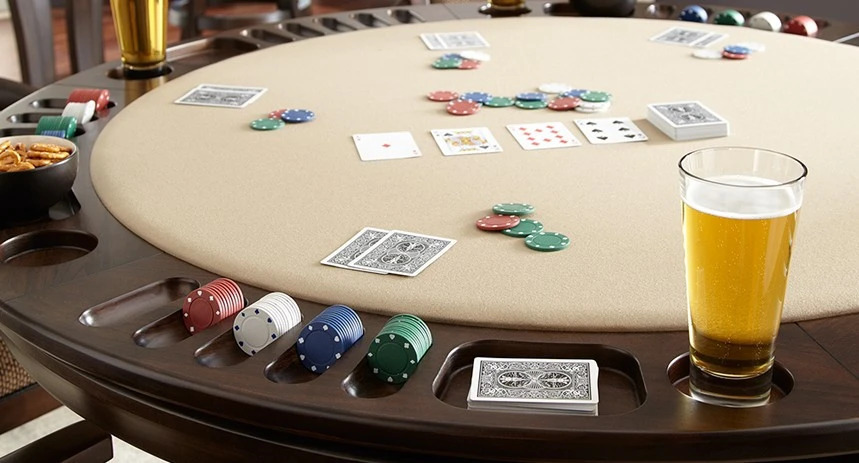
The walls and lighting set the mood; the details on the table itself decide whether the room holds up under close inspection. A high-end table with cheap felt and a plastic chip set undercuts everything already built around it.
Clay poker chips are the standard for a serious setup. They're heavier than composite or plastic chips, typically in the 10 to 14 gram range, and the difference is obvious the moment someone picks one up. Custom denominations, colours, or an engraved logo are common upgrades for anyone building the room around a specific theme or a regular game group. And rectangle poker chip plaques add a high-roller feel to any game.
Felt gets less attention but matters just as much. Speed cloth, a tighter-woven fabric that lets cards glide smoothly, has become the preferred surface for regular players because it reduces friction and wears more evenly over time. Custom graphics or logos are available but worth approaching carefully; a subtle design ages better than a busy one, which can start to look dated within a few years.
Smaller accessories round out the table: card guards, a dealer button, and a cut card are inexpensive but easy to forget until a game is already underway. None of these carry much weight individually, but skipping them is a common way a well-designed room still ends up feeling improvised at the table.
Integrated Technology: AV, Charging & Smart Controls
Technology in a luxury poker room should be felt, not seen. The goal is convenience without clutter, so most of the best upgrades are the ones nobody notices until they need them.
Hidden charging is the most practical addition. Built-in USB ports or wireless charging pads at each seat keep phones off the table and cords out of sight, which matters more in a formal room than a casual one. Some higher-end tables now build this directly into the rail, so you don't have to retrofit later.
A wall-mounted television or small media wall gives the room a second use beyond poker nights, whether that's a tournament between hands or a movie on an off night. Smart lighting controls, tied into the dimming setup covered earlier, let the room's mood shift from a single panel or app instead of a row of switches.
None of this needs to be elaborate. Clean charging, one good screen, and lighting on a smart dimmer cover most of what people actually use, and they avoid the trap of over-installing technology that ends up unused or outdated within a few years.
Acoustics and Comfort for Extended Play
Acoustics rarely make anyone's initial wish list, but they shape how a room feels more than most people expect. Hard flooring, bare walls, and a table full of people talking over each other create an echo that gets tiring well before the night is over.
Rugs absorb sound at floor level, and the wood panelling and velvet drapery mentioned earlier already do some of this work without being labelled as acoustic treatment. In rooms with particularly hard surfaces, upholstered wall panels or dedicated acoustic panels behind decorative fabric bring the noise down further without looking like a recording studio.
Temperature and airflow matter too, especially in a room that regularly holds a group for several hours. A dedicated thermostat zone or a ceiling fan gives hosts more control than relying on whatever the rest of the house is set to.
At this point, comfort is less about any single feature and more about the room not calling attention to itself. Nobody notices good acoustics or a well-regulated temperature. They notice the absence, usually as a complaint that the room feels stuffy or that they can't hear the person next to them.
Beyond the Table: Building Out a Full Home Casino/Lounge
A poker table can stand on its own, but the rooms that read as genuinely luxurious usually extend past it. Treating the space as a small lounge, rather than a room built around a single piece of furniture, gives it staying power beyond poker night.
Bar and Beverage Stations
A wet bar or beverage station along one wall keeps drinks close without breaking up the game for a kitchen run. A wine fridge or beverage cooler built into cabinetry, paired with proper glassware and a small selection of spirits, turns a corner of the room into a functional bar rather than a folding table with bottles on it.
Pairing a Poker Room with a Billiards or Game Room
Many rooms built to this level of detail don't stop at poker. A nearby billiards table, in the same room or an adjoining one, gives the space a second draw for nights when the group isn't playing cards, and it reinforces the design language already established by the table, lighting, and finishes.
The two furniture types also complement each other well. A pool table and a poker table sharing a palette, wood tone, and hardware finish come across as a single planned space rather than two separate purchases that happen to share a room. Brands like Canada Billiards, Legacy and Olhausen offer matched sets to keep your design consistent.
Luxury Poker Room Design Styles to Consider
With the individual elements covered, it helps to see how they combine into a few recognizable directions. None are mutually exclusive, and many finished rooms borrow from two, but picking a primary direction before choosing furniture and finishes beats working backward from a table someone liked.
Classic Private Club
The look most people picture first: dark wood panelling, leather chairs, brass hardware, and a formal, old-world feel borrowed from traditional gentlemen's clubs and private card rooms. It leans on the materials covered earlier: deep wood tones, leather, brass accents, and favours traditional furniture silhouettes over anything sleek or angular.
Contemporary Minimalist
A more restrained direction that trades ornamentation for clean lines and a tighter palette, usually black, white, grey, and natural wood. The luxury comes through material quality and precision rather than visible detail. A minimalist room can look just as high-end as a heavily decorated one, but every piece has to be well made, since there's less to distract from a weak choice.
Modern Casino-Inspired
This style borrows directly from boutique casinos and high-limit gaming rooms: LED accent lighting, bold colour contrasts, and statement furniture pieces. It's the direction most likely to include the tech-forward features covered earlier, tables with integrated lighting, media walls, and smart controls, and it tends to suit larger rooms better, since the bolder elements can feel busy in a smaller footprint.
Small-Space Luxury: High-End Ideas for Limited Square Footage
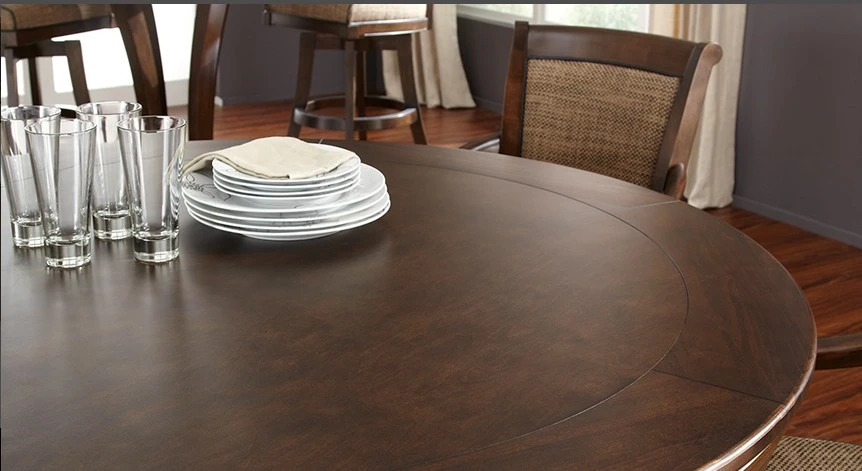
Every style above assumes a room with some breathing room. Square footage limits size, not quality, and a smaller room can still hit every mark covered so far; it just takes more discipline about what makes the cut.
The table is the first decision to reconsider. A round or octagon table in the six-seat range takes up meaningfully less floor space than an oval ten-top, and a convertible dining top makes even more sense in a room that has to earn its keep beyond poker nights. Wall-mounted storage for chips and accessories frees up floor space a cabinet or bar cart would otherwise take, and a single well-placed mirror can make a small room feel larger without adding any furniture.
A few other adjustments matter more in tight spaces than large ones:
- Lighter wall tones open up the room, even within a generally darker palette; a deep charcoal reads differently in a 200-square-foot room than in a great room.
- Wall-mounted televisions instead of a media console keep the floor clear.
- Modular or armless seating gives a few extra inches of clearance around the table.
The goal isn't fitting more into the room. It's choosing fewer things and making sure each one is worth the space it takes up. Here are more ideas for a small game room.
Real Room Inspiration
Design principles are easier to apply with a reference point. A few finished rooms, each leaning into a different style covered above, show how these choices come together in practice.
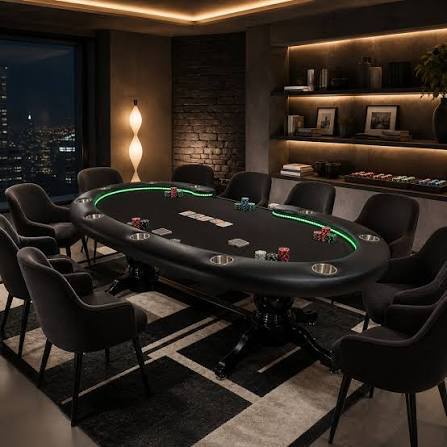
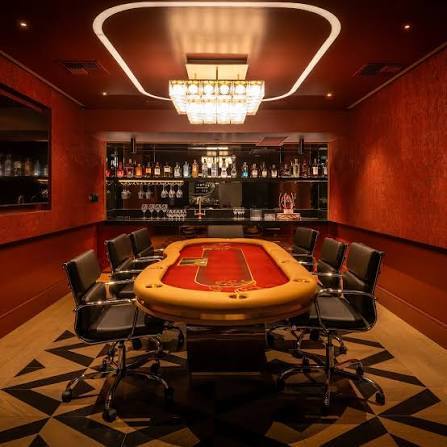
A private club-style room built around a mahogany table and leather-backed chairs. The brass pendant light above the table and the wood panelling behind it are doing most of the work here; the palette stays narrow on purpose.
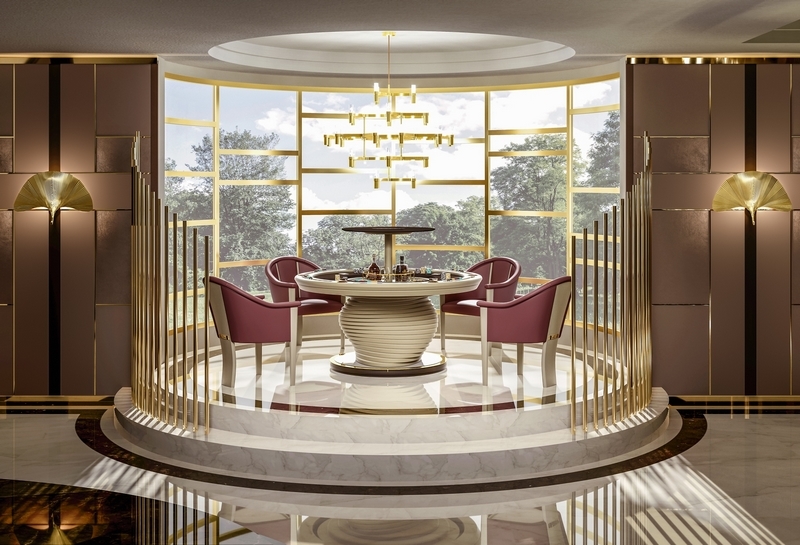
The table and chairs are the visual focus in a room with almost no competing detail, which puts more pressure on material quality since there's nowhere for a weak choice to hide.
A larger room that borrows directly from boutique casino design: LED lighting integrated into the table rail, a bolder colour contrast on the walls, and a media wall visible in the background.
Frequently Asked Questions about Luxury Poker Rooms
How much does it cost to build a luxury poker room in Canada?
Building a luxury poker room in Canada can cost about C$50,000 to C$250,000+ for a high-end residential space. Costs depend on room size, renovations, custom poker tables, seating, lighting, ventilation, security, and audiovisual systems. Commercial poker rooms can cost substantially more because they require larger spaces, specialized infrastructure, and regulatory compliance.
What's the ideal room size or square footage for a dedicated poker room?
The ideal size for a dedicated poker room is about 200–300 square feet for one full-size table. Allow roughly 4–5 feet of clearance around the table so players can sit, stand, and move comfortably. Luxury rooms may require 300–500+ square feet for additional seating, storage, a bar, or entertainment features.
Should a luxury poker room be professionally designed or installed, or is it a DIY-friendly project?
A luxury poker room should be professionally designed and installed when it requires custom cabinetry, electrical work, lighting, ventilation, soundproofing, or integrated technology. DIY installation works for furniture, décor, and simple equipment. Professional design provides better space planning, lighting placement, electrical integration, and finish quality for a high-end room.
What ceiling height works best for a poker room with pendant or chandelier lighting?
A 9- to 10-foot ceiling works well for a poker room with pendant or chandelier lighting because it provides room for suspended fixtures without crowding the playing area. Position the fixture high enough to illuminate the entire table without blocking players' sightlines. Taller ceilings also accommodate larger statement chandeliers more comfortably.
How do you maintain a luxury poker table and leather seating over time?
Maintain a luxury poker table by vacuuming or brushing the felt regularly, cleaning spills immediately, and protecting the surface from food, liquids, and direct sunlight. Maintain leather seating by dusting it weekly, wiping it with an appropriate leather cleaner, and conditioning it about every 3–6 months, following the manufacturer's care instructions.